Most advice on AI in content marketing falls into two camps. Either it’s an overexcited demo that never works in real life, or it’s a list of generic prompts that produce output no one would actually publish. Neither is useful.
The truth is AI does work for content marketing. Just not for everything. After testing more than 20 different workflows on real client work, four held up consistently enough to keep using. These aren’t shortcuts. They’re legitimate time-savers that still require human judgment to get right.
1. Build Audience Research Faster with AI
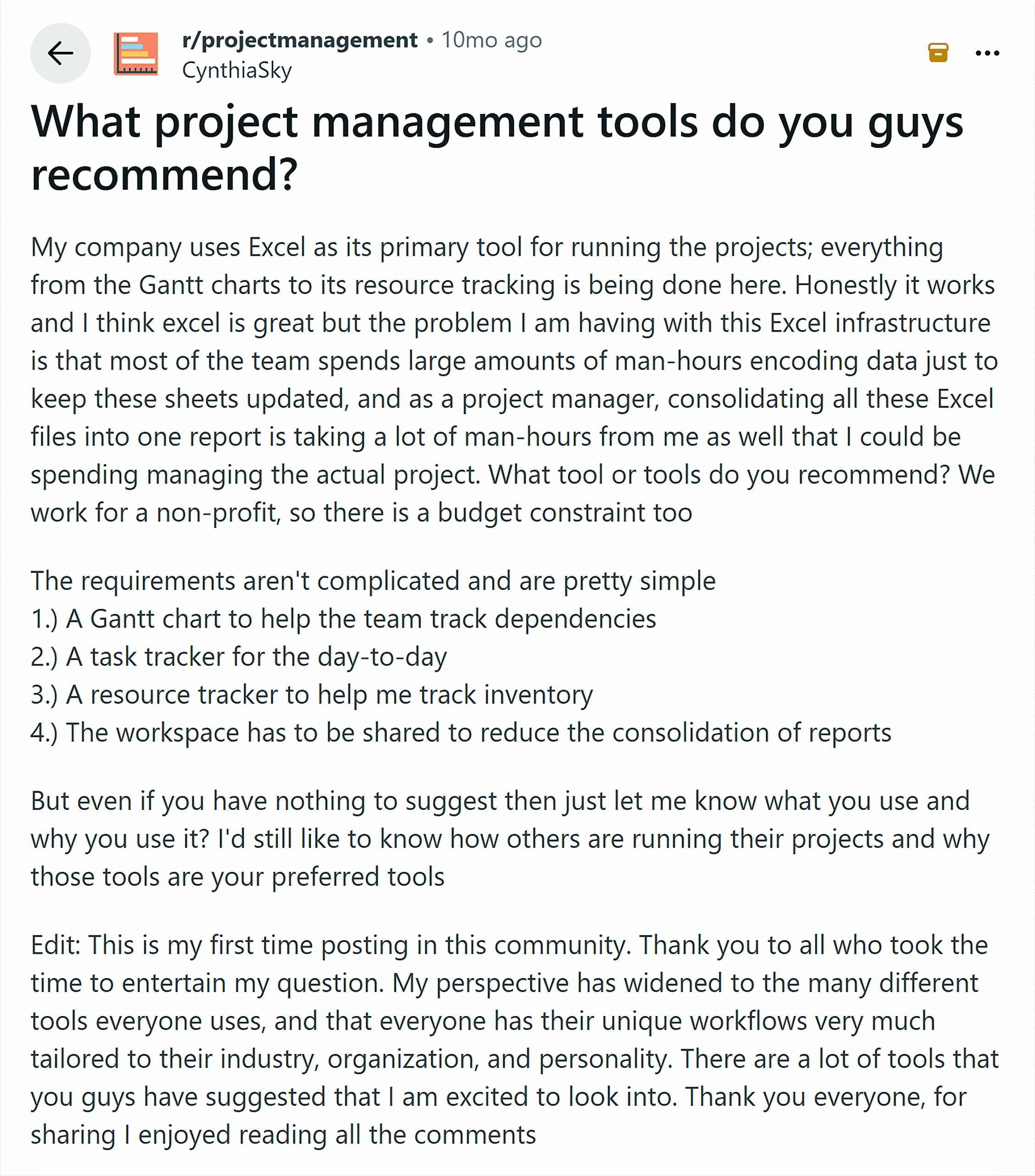
Understanding how your audience actually talks about their problems is the foundation of any good content. The old way meant spending hours reading through reviews, forum threads, and support tickets manually. With AI, that same research takes minutes.
Pull 15 to 20 sources into an LLM: G2 or Capterra reviews, Reddit threads, sales call transcripts, support tickets. Then ask the model to extract verbatim phrases grouped by pain point, goal, or objection. What you get back is a customer language swipe file you can use across headlines, CTAs, and body copy.
The difference in copy quality is immediate. Generic phrases like “collaborate with team members” become “see what everyone’s working on in real time, skip the constant check-ins.” One product team used this exact method to rewrite their homepage using words pulled directly from user responses. Trial signups went up 64%. That’s not AI magic. That’s using real customer language instead of marketing speak.
This is one of the most underrated parts of an AI content marketing strategy that 2026 should include. Not AI writing the copy, but AI surfacing the raw material for better copy.
2. Find Competitor Content Gaps in Minutes
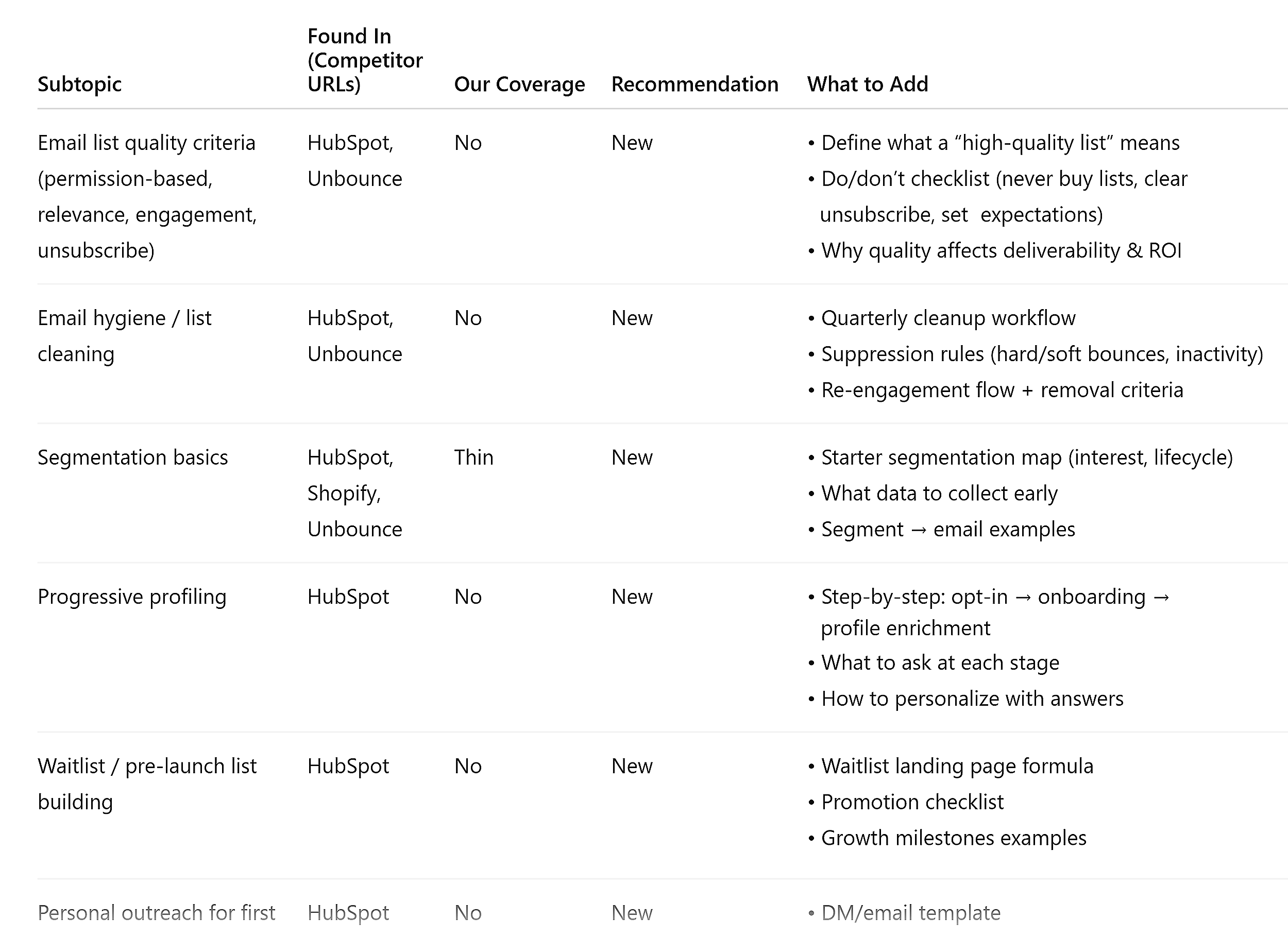
Your competitors are showing you exactly what to write next. Most teams just aren’t looking properly.
An AI content gap analysis compares what your top-ranking competitors cover against what your own content covers. Feed the model the H2 and H3 outlines of 3 to 5 competitor articles on the same topic and ask it to flag what they cover that you don’t.
A gap audit on a content marketing article turned up 25 different missing subtopics in one pass. Not all of them were worth adding. Some would bloat the article. Some didn’t fit the brand voice. But the high-priority gaps that appeared across all competitors? Those are the ones Google is already rewarding. Adding them is a quick win with real ranking upside.
Track the page in GSC for 14 to 28 days after publishing. Watch for gains in queries and clicks. The signal shows up faster than most people expect.
3. Create SEO-Ready Content Briefs from SERP Data
Writing a content brief from scratch used to take 3 or more hours. Pulling top-ranking articles, identifying subtopics, extracting People Also Ask questions, finding data points to cite. AI for content briefs compresses that into 15 minutes.
The workflow is straightforward. Take the top 5 to 7 ranking URLs for your target keyword. Add one or two relevant Reddit threads. Pull the PAA and People Also Search For questions from the SERP. Feed all of it into an LLM and ask for a complete content brief: H2 and H3 outline, key points per section, stats to verify, visual suggestions, title options, meta descriptions, and an FAQ section.
The output won’t be perfect. Claims still need fact-checking. Some sections need reordering. You’ll want to bring your own angle and expertise. But the structural research is done. What used to eat a full morning is now a 15-minute task with a strong foundation to build on.
For any agency or content team producing more than a few articles a month, this is where AI in content marketing pays back the fastest.
4. Maintain Brand Voice as You Scale
Scaling content production with AI creates one consistent problem: everything starts sounding the same. Corporate. Generic. Not you.
The fix is building a style guide first, then using AI to enforce it. Brand voice AI writing only works when you give the model actual constraints to follow. Without them, it guesses. And it guesses badly.
Take your 5 best-performing articles and ask an LLM to extract voice pillars from them. What tone do they share? What phrases come up repeatedly? What grammar rules are consistent? What words does your brand avoid? The model will return specific do and don’t examples, not vague advice like “be conversational,” but real guidance like “acknowledge the reader’s problem before offering the solution.”
Once the style guide exists, use it as a reference for every piece. Upload it alongside any draft and ask the model to flag off-brand phrases and suggest rewrites. Subtle differences get caught. “Professional expertise” becomes “experienced, steady guidance.” The copy stops sounding like every other agency in your niche.
This matters especially when multiple writers are producing content. A style guide enforced by AI keeps voice consistent, whether the piece was written by your best writer or a freelancer on their first brief.
What to Do With This
Don’t try to implement all four workflows at once. Pick the biggest bottleneck in your content operation right now and start there.
Drowning in competitor research? Start with gap analysis. Briefs taking too long? Automate the SERP work. Team voice drifting as you add writers? Build the style guide this week.
Run one workflow. Refine the prompt until it’s repeatable. Then move to the next one. That’s how a real AI content marketing strategy 2026 gets built, one solved problem at a time, with a human making the final call on everything that matters.