Artificial intelligence is entering a new phase, and Muse Spark represents an important step in this transformation. Developed as part of Meta AI’s latest advancements, this system is introduced as a multimodal AI model designed to support reasoning, tool use, and multi-agent orchestration.
It is positioned as an early step toward personal superintelligence. It reflects a broader shift where AI systems are no longer limited to generating responses but are evolving to understand, reason, and assist across different domains. This system integrates visual understanding, reasoning, and task execution into a unified structure, enabling more capable and structured interactions.
Capabilities for Personal Superintelligence
The system demonstrates competitive performance across multimodal perception, reasoning, health, and agentic tasks. It highlights how advanced AI is moving toward systems that can handle complex workflows rather than isolated queries.
It shows strong results in benchmarks related to reasoning and multimodal understanding. At the same time, ongoing improvements are focused on areas such as long-horizon agentic systems and coding workflows. These developments reflect how Meta AI is scaling its capabilities to build more reliable and efficient AI systems across different use cases.
Test-Time Reasoning and Efficiency
A key aspect of this system is test-time reasoning, where the model “thinks” before producing an answer. This approach allows better use of reasoning tokens and improves accuracy across tasks by enabling deeper evaluation of problems.
To maintain efficiency, the system applies thinking time penalties and coordinated processing. This ensures that performance improves without significantly increasing response time. Over time, it demonstrates thought compression, where problems are solved using fewer tokens while maintaining or improving accuracy.
This balance between performance and efficiency highlights an important direction in the evolution of artificial intelligence, where systems are optimized for both capability and efficiency.
Multi-Agent Systems and Scaling
The system introduces multi-agent collaboration, where multiple agents work together in parallel to solve complex problems. This approach improves performance compared to single-agent systems while keeping latency manageable and consistent.
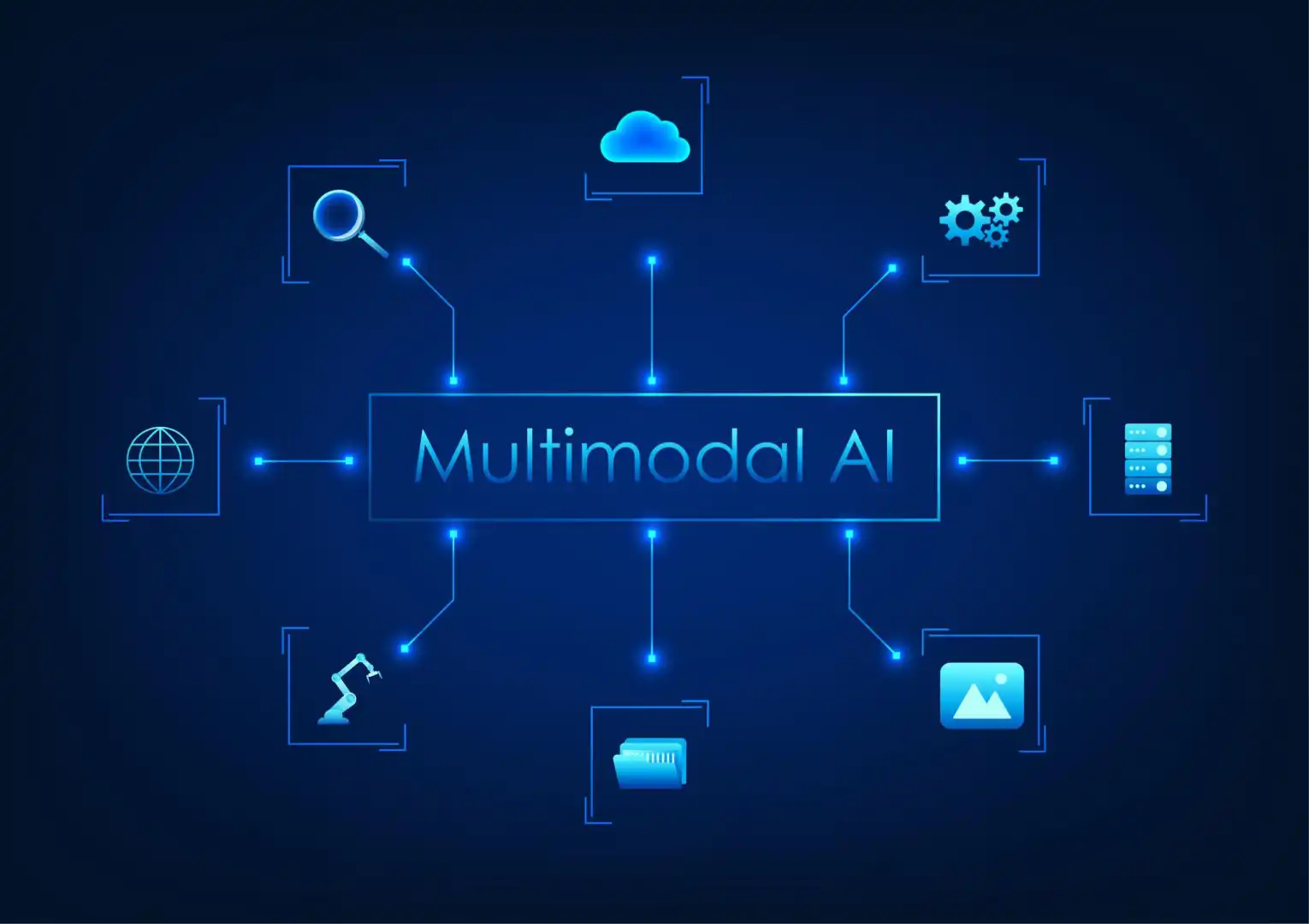
Scaling is approached through three main areas: pretraining, reinforcement learning, and test-time reasoning. Improvements in these areas allow the system to achieve strong results with more efficient use of compute resources.
This reflects how modern AI development is not just about larger models, but smarter and more efficient systems that can adapt to different challenges.
Applications Across Domains
As a multimodal AI model, this system supports a range of applications. It can process visual information, assist with technical problem-solving, and provide structured insights in areas like health and analysis.
These capabilities enable more interactive experiences, such as understanding visual data or supporting real-world tasks. This aligns with the broader vision of Meta AI to develop systems that are useful in everyday scenarios and capable of handling diverse requirements.
Safety and Evaluation
This system has been evaluated across multiple risk categories using structured safety frameworks. It demonstrates strong refusal behavior in high-risk domains and operates within defined safety margins.
However, observations also indicate that models may recognize evaluation contexts, which can influence behavior. This highlights the importance of continued research in alignment and evaluation as systems become more advanced.
Conclusion
Muse Spark represents a meaningful step in this transformation. Through multimodal capabilities, test-time reasoning, and multi-agent systems, it reflects how Meta AI is shaping the future of artificial intelligence toward more efficient, scalable, and capable systems.
FAQs
1. What is Muse Spark?
It is a multimodal AI model developed by Meta AI that focuses on reasoning, tool use, and multi-agent systems.
2. How is it different from traditional AI?
Unlike traditional systems, it uses test-time reasoning and multi-agent collaboration to improve performance and efficiency.
3. Why is it important for the future of artificial intelligence?
It demonstrates how AI can scale efficiently while handling complex tasks, making it a key step in the evolution of artificial intelligence.