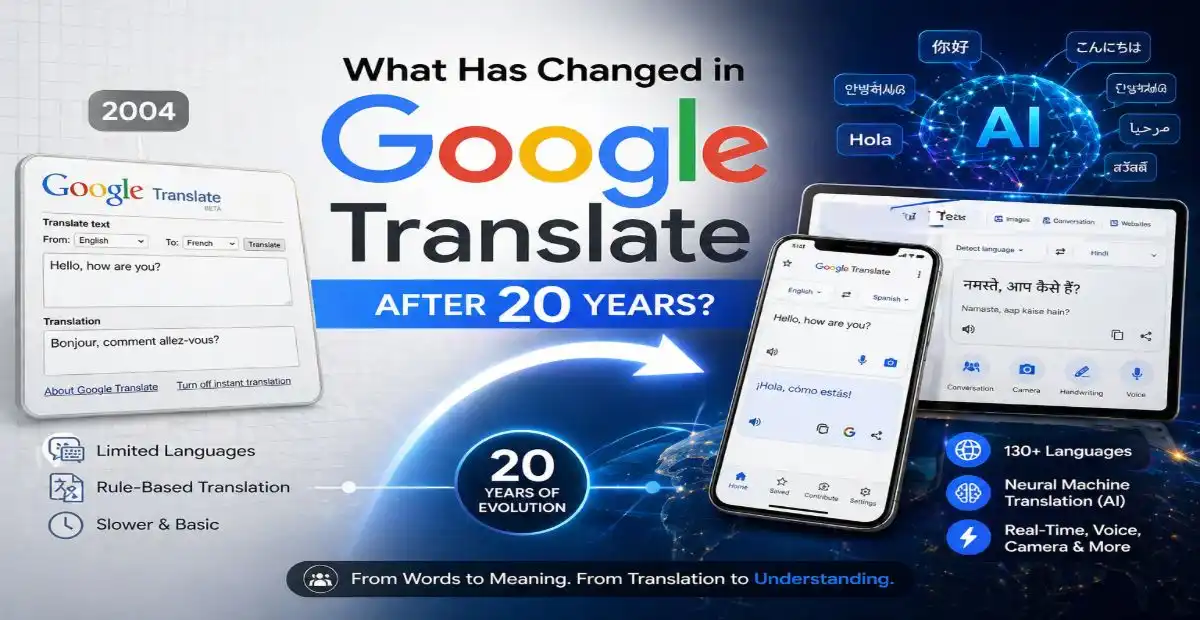
Why has Google Translate become such an important tool today?
You probably don’t think about it much. You just open Google Translate, paste something, and move on. But if you stop for a second… It’s actually doing something pretty big.
Google Translate started as a simple experiment back in 2006. Today, it’s used by more than 1 billion people every month. That shift didn’t happen randomly. It happened because people needed something simple to understand each other across languages, and this tool quietly became that bridge.
How did Google Translate evolve from a basic tool to an AI system?
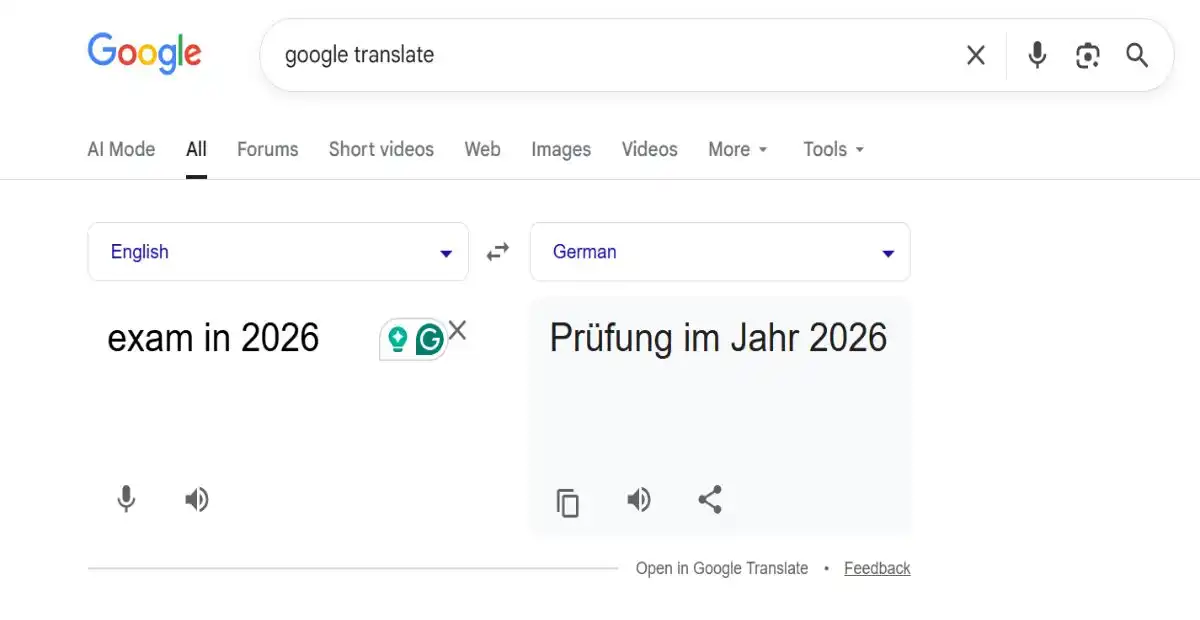
Earlier, translation was very literal. You type a sentence, and it just replaces words. Sometimes it worked, sometimes it felt completely off.
Over time, Google moved from statistical models to neural networks and now to advanced AI systems. These systems don’t just translate words anymore. They understand sentence structure, tone, and meaning. That’s why translations today feel more natural compared to how they used to be years ago.
How many languages and users does Google Translate support now?
This part is honestly a bit surprising when you look at the numbers.
Google Translate now supports around 250 languages. That covers almost 95% of the world’s population. And every month, more than 1 billion users rely on it. On top of that, around 1 trillion words are translated regularly across platforms.
It’s not just a feature anymore. It’s something people depend on daily for communication, learning, and even work.
Also Read: Google Built an AI That Writes Research Papers
What are the latest AI features in Google Translate?
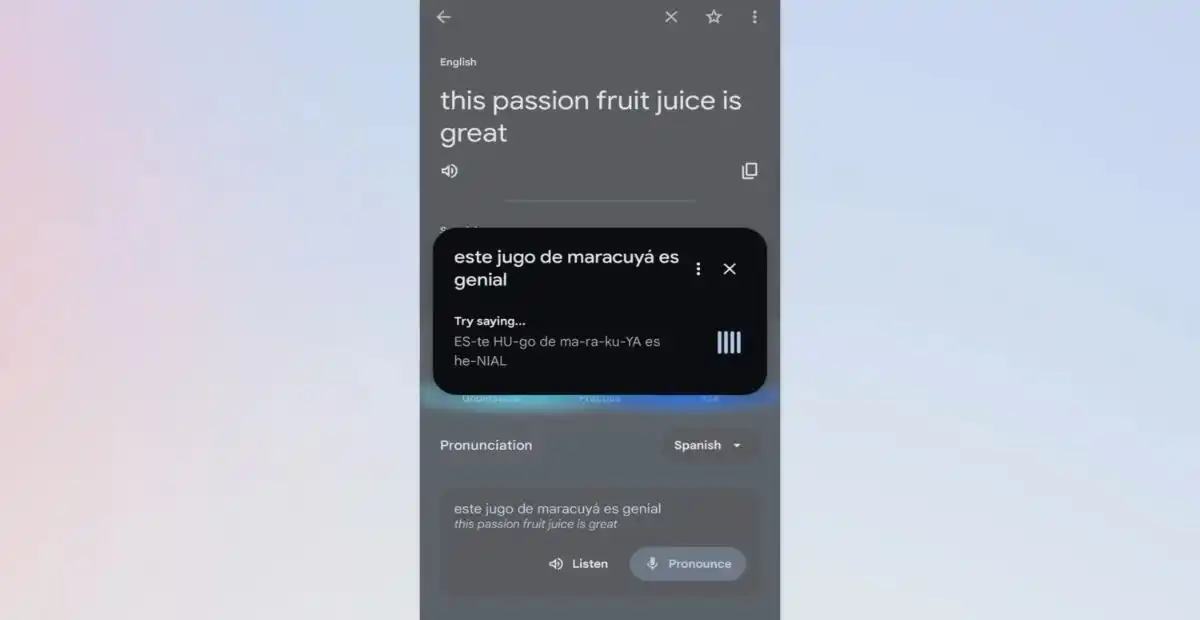
This is where things start to feel different from the old version people remember.
Google Translate now includes features powered by AI that go beyond simple translation. One of the newest additions is pronunciation practice. You can speak a word, and the system gives feedback instantly to help you improve.
There’s also real-time conversation translation using AI models. Instead of translating word by word, it keeps track of context and flow, so conversations feel more natural.
Can Google Translate really handle real-time conversations?
Earlier, translation meant typing and waiting. Now it’s becoming more like talking.
With newer AI models, Google Translate can support live conversations where two people speak different languages and still understand each other in real time. It keeps track of tone, context, and pacing so it doesn’t feel robotic.
In fact, many conversations using this feature last more than five minutes, which shows people are actually relying on it for real communication.
How is Google Translate used in real life today?
This is where it becomes more than just a “tool.”
People use it for things like:
- Traveling and understanding local signs
- Talking to people in different countries
- Learning new languages
- Following global events or content
- Even understanding slang or trending phrases
It’s not limited to one use case anymore. It’s part of daily communication.
What makes Google Translate useful even without the internet?
One underrated feature is offline translation.
You can download languages and still use the tool without an internet connection. This becomes really useful when you’re traveling in areas with a poor network or no signal at all.
It ensures that translation is always available when you need it, not just when you’re connected.
How does visual translation change the travel experience?
You’ve probably seen this or maybe even used it.
You point your camera at a menu or sign, and it instantly translates the text on your screen. No typing, no guessing.
This feature has become especially useful for travelers. It removes confusion and makes navigation much easier in a new place.
What kind of phrases do people translate the most?
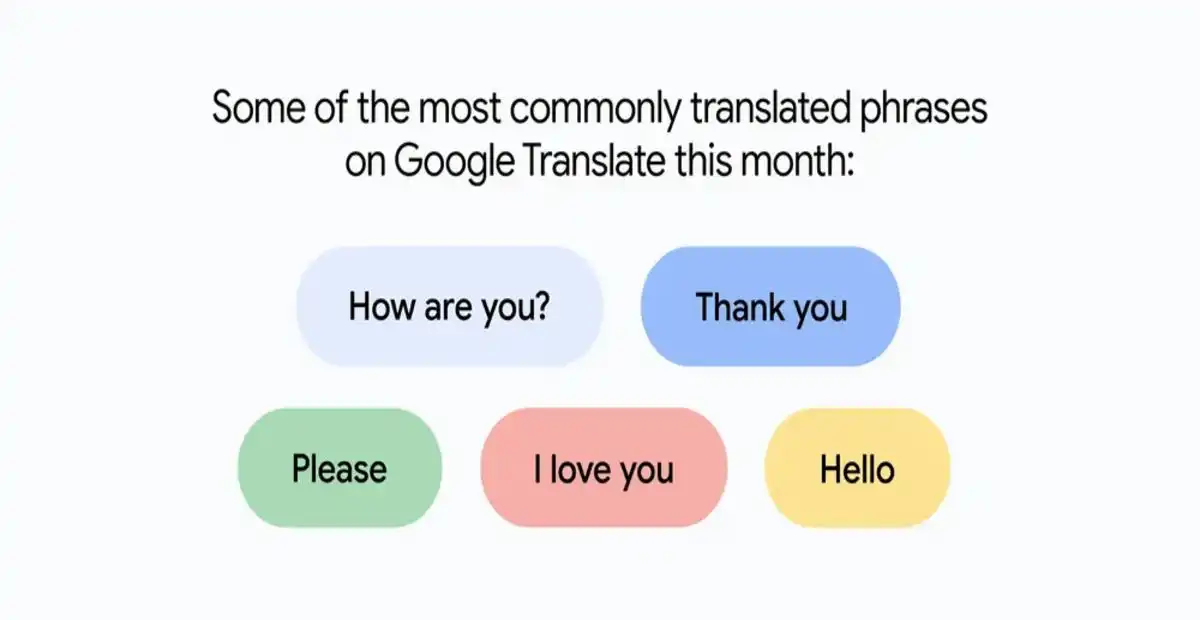
This part is actually very human.
The most commonly translated phrases are not technical or business-related. They are simple, emotional expressions like “thank you,” “I love you,” and “how are you.”
Which kind of shows that at the end of the day, people are not just translating words. They are trying to connect.
What does the future of Google Translate look like?
If you look at how far it has come, it’s clear that translation is moving toward something bigger.
It’s no longer about converting text. It’s about understanding meaning in real time. With AI models improving, we can expect more natural conversations, better context understanding, and smoother communication across languages.
It might not feel like a tool anymore. More like a layer that helps people communicate without barriers.
Conclusion: Is Google Translate more than just a translation tool now?
Yeah… it is.
It started as a small experiment. Now it’s something people rely on every day. From translating menus to having real conversations, it has quietly changed how people communicate across the world.
And the interesting part is… most of us don’t even notice it anymore.
It just works.