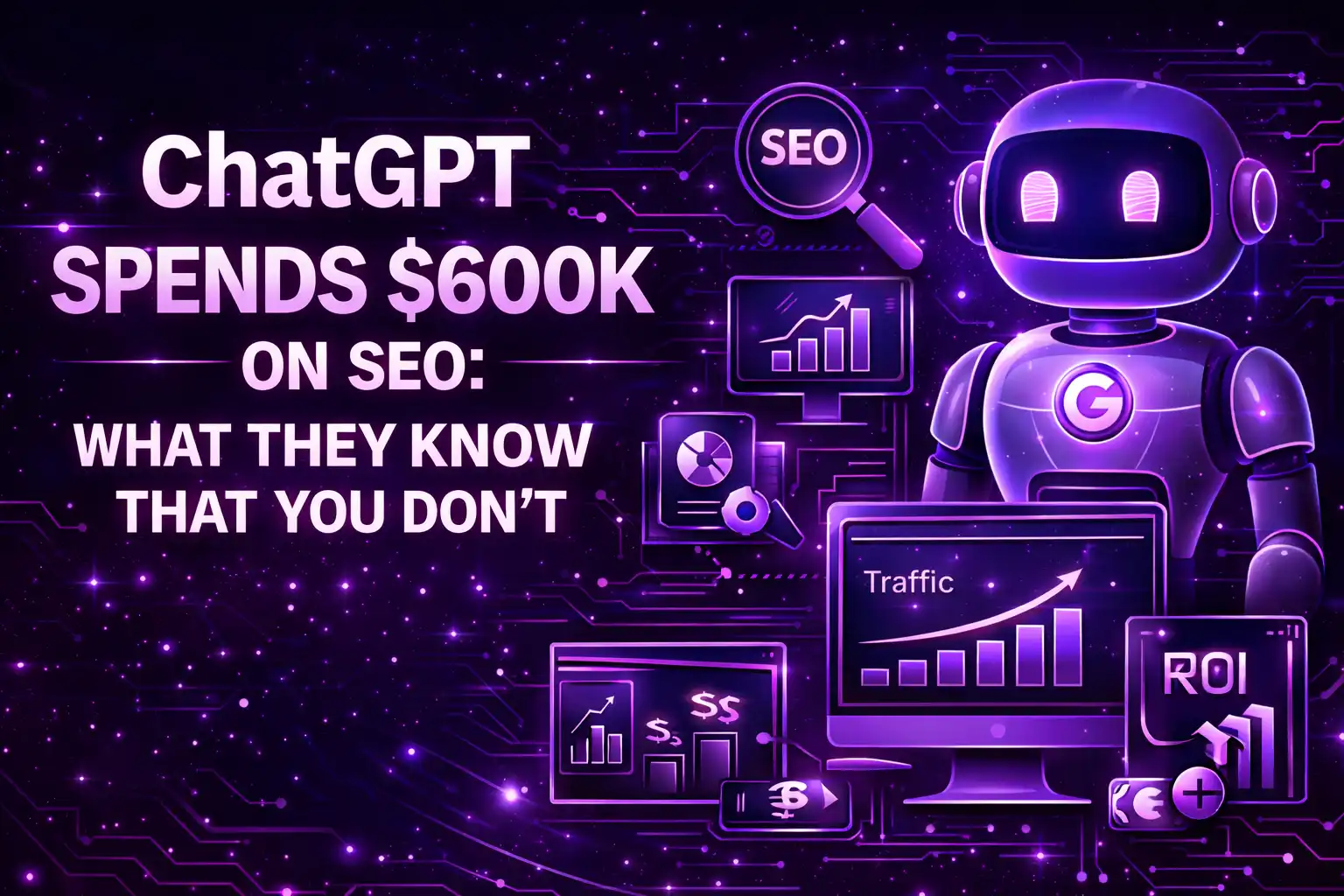
There is a loud conversation happening right now about how AI tools like ChatGPT are killing SEO. And while that debate fills up LinkedIn feeds, OpenAI quietly spent up to $600,000 hiring two dedicated SEO roles to grow ChatGPT through search.
That is not a company that thinks SEO is dead. That is a company that understands exactly how SEO works and is putting serious money behind it.
Here is what that investment looks like, how ChatGPT compares to Claude and Perplexity on SEO fundamentals, and what any business can take from this.
The Numbers Behind ChatGPT’s SEO Bet
OpenAI hired a content strategist with SEO experience at $310,000 to $393,000. Then they added a second role focused on SEO, CRO, and web strategy. Total estimated investment: $410,000 to $600,000 for just the two positions.
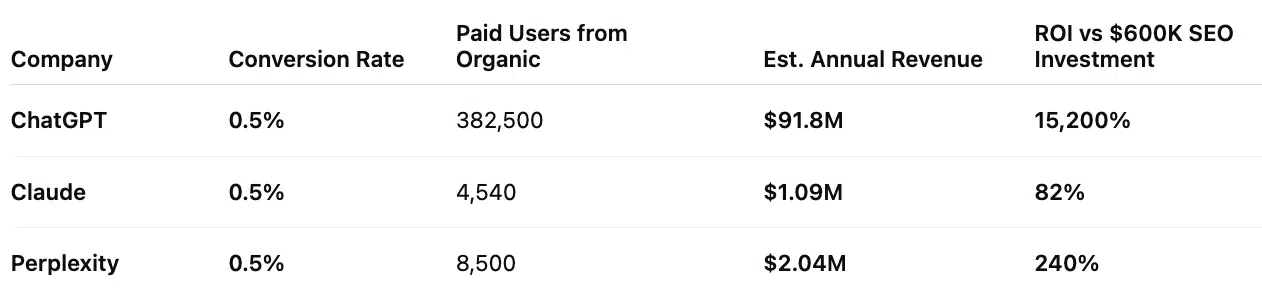
The return on that investment? Using Semrush data, ChatGPT pulls in 76.5 million monthly organic visits. At a conservative 0.5% conversion rate and a $20 per month entry price, that translates to roughly $92 million in projected annual revenue from SEO alone. That’s a 15,200% ROI.
Claude sits at 908,000 monthly organic visits. Perplexity at 1.7 million. Both show 82% to 240% ROI on similar estimates. Strong numbers, but nowhere close to what ChatGPT uses SEO to grow.
The gap isn’t luck. It’s built into their technical foundation from day one.
ChatGPT vs Claude vs Perplexity SEO: Who’s Actually Winning
A keyword ranking comparison tells the story fast.
ChatGPT ranks for approximately 287,800 keywords. Perplexity ranks for around 184,800. Claude ranks for roughly 36,000. That’s not a small gap. Claude is ranking for about 12% of what ChatGPT ranks for despite being a comparable product.
Domain authority follows the same pattern. ChatGPT sits at 99. Perplexity at 81. Claude is 75. Brand search volume makes it even clearer: “ChatGPT” gets 45.5 million monthly searches. Perplexity gets 1 million. Claude gets 500,000.
So what is ChatGPT doing technically that the others aren’t?
The Technical SEO Gaps That Explain Everything
Robots.txt
ChatGPT’s robots.txt file is fully optimized. Multiple sitemaps included. Specific crawlers blocked where needed, others allowed. It’s a detailed, intentional file that tells search engines exactly what to crawl and what to skip.
Perplexity’s robots.txt is basic. Claude didn’t have one at all until recently. A missing robots.txt doesn’t sound dramatic, but it creates real confusion for search engines trying to crawl and index the site. It’s the kind of foundational issue that quietly costs rankings over time.
One more thing worth noting: ChatGPT and Claude actually block each other from crawling their respective sites via robots.txt. Competitors keep competitors out.
URL Structure
This is where the ChatGPT vs Claude vs Perplexity SEO gap becomes very visible. ChatGPT builds keywords directly into URLs. When a user creates and shares something on the platform, the URL reflects what that content is about. Search engines and LLMs can read those URLs and understand the page topic immediately.
Claude’s public artifact URLs don’t include any descriptive words. Just random strings of characters. Google’s John Mueller has called keywords in URLs a “very, very small ranking factor,” but real-world data across these platforms shows it matters more than that label suggests, especially at scale.
User Generated Content as an SEO Engine
This is ChatGPT’s biggest structural SEO advantage. Every shared conversation, every public artifact, every user-created page becomes an indexable URL. Millions of pages created by users, each targeting different search queries, building out an enormous keyword footprint that no editorial team could replicate manually.
Perplexity went after the financial and stock content pages. Claude targets high-intent professional audiences through blog articles. Both are solid approaches, but neither scales the way user-generated indexable content does.
Content Optimization: Where Everyone Falls Short
All three platforms produce content, use cases, blog articles, and discovery pages. But the optimization quality varies a lot.
Meta titles, meta descriptions, canonical tags, and image naming are inconsistent across Perplexity and Claude. Some Perplexity pages weren’t even indexed on Google as a result of these gaps. Image file names were left as default strings instead of descriptive names that search engines can read.
These aren’t small details. They’re the difference between a page that ranks and a page that sits invisible. As part of any AI platform’s SEO strategy 2026, getting these basics right is non-negotiable.
What This Actually Means for Your Business
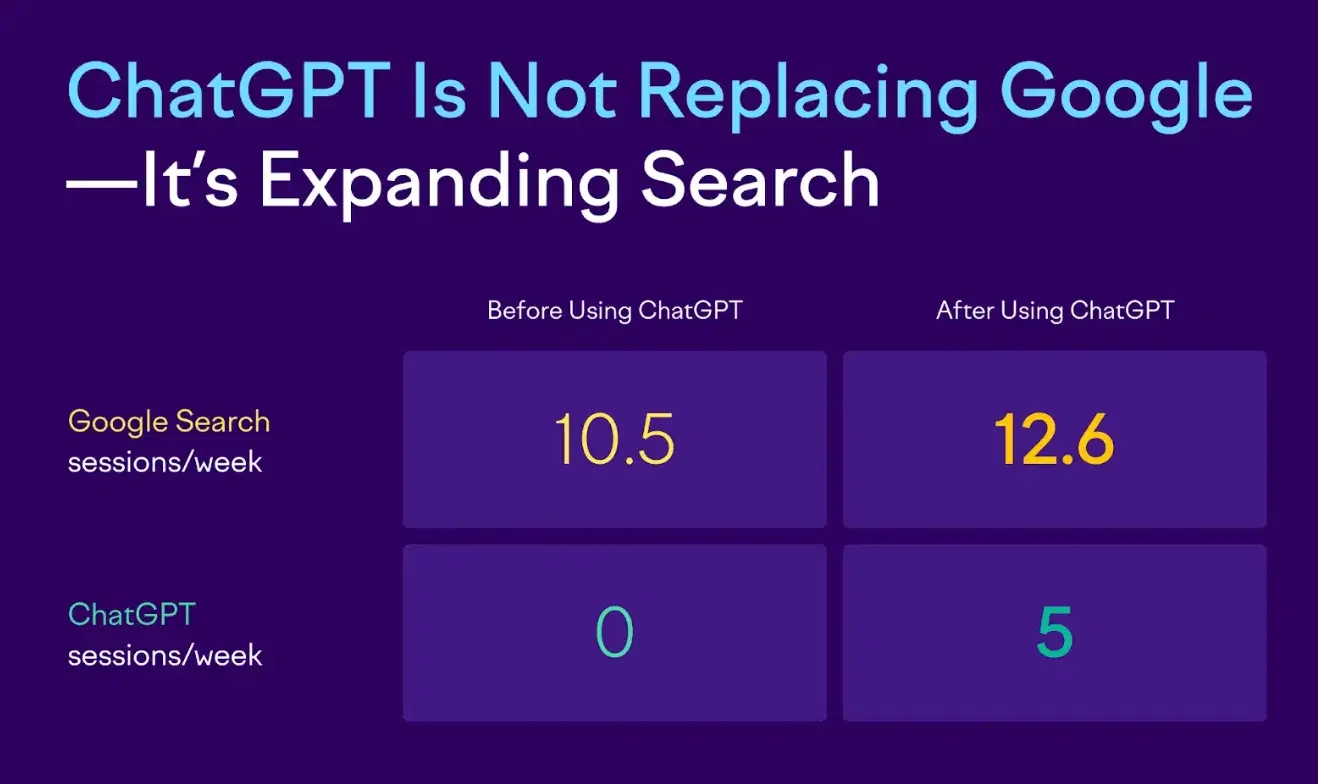
The argument that AI is replacing SEO keeps getting louder. But the companies building those AI tools are doing the opposite, abandoning search. They’re investing in it heavily.
ChatGPT’s SEO playbook isn’t complicated. Clean technical foundation. Keywords in URLs. Content that matches what people are actually searching for. User-generated content at scale, where possible. Conversion paths are built for both trial users and paid users.
The same principles that drive SEO for AI tools are the same ones that work for any business website. Fast pages. Descriptive URLs. Properly optimized meta tags. Content that answers real questions. Authority built through links and brand recognition.
If OpenAI is spending $600,000 on SEO talent while simultaneously building the tool that people claim will replace Google, that tells you everything about where search is actually going. SEO isn’t shrinking. The stakes are just getting higher.